
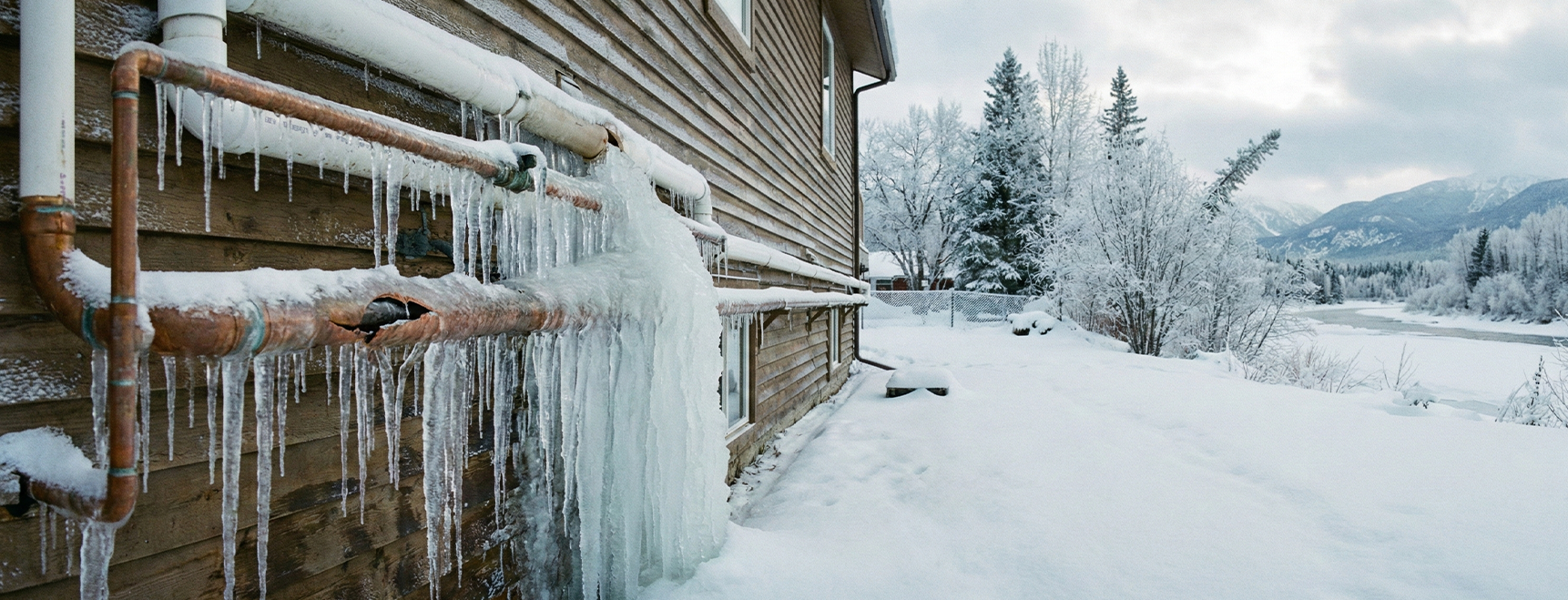
Winter storms don’t always announce themselves loudly. Sometimes it’s just a quiet stretch of cold nights, and then suddenly a property owner notices water where it shouldn’t be. A small pool in a storage room. A stain spreading across a ceiling. Cabinets swelling under a kitchen sink. By then, the pipe has already split and the damage has begun.
For insurers and claims teams, this is a familiar seasonal pattern. The calls come in quickly, and what starts as a few isolated reports can turn into a steady line of burst pipe insurance claim files waiting for attention. Some are straightforward repairs. Others grow into broader losses with multiple affected units or commercial interruptions, edging into large loss claims territory. Either way, timing matters.
Why frozen pipes fail – and why it becomes a claims issue
When temperatures drop and stay low, water in unprotected or poorly insulated lines can freeze. As it expands, pressure builds until the pipe ruptures. In some buildings, it happens in crawl spaces or mechanical rooms. In others, it’s a small copper line in a bathroom wall. The first visible sign might be water, or it might be a sharp loss of water pressure.
A claim moves faster when policyholders recognize what they’re looking at. Some will shut off the main line right away. Others aren’t sure where it is, or the valve is buried under a panel or a snow-covered access point. Those delays are where secondary damage starts: warped flooring, electrical issues, mold concerns, or materials that can’t be dried and saved.
The first steps most property owners take
Every carrier will have its own guidance, but generally property owners tend to follow a similar path, especially if they’ve lived through a winter loss before:
- Stop the flow if possible. Turning off the supply line or the whole system helps limit additional damage.
- Get visual documentation. Photos and short videos, even if imperfect, help later when an adjuster reviews the sequence of events.
- Secure areas for safety. Water and electricity rarely mix well; avoiding injury is priority one.
- Report the loss to the carrier. Quick notice allows faster assignment and reduces uncertainty.
From that point, many insurers involve an independent insurance adjuster to verify the cause, measure the affected areas, and begin building an estimate for the burst pipe insurance claim. During regional cold snaps, especially when storms linger, the volume of claims can increase and require additional capacity.
What adjusters look for in frozen pipe losses
Pipes don’t always freeze and burst in visible spaces. One claim might involve a line in a garage ceiling. Another might be above a drywall return in a lobby. And in multi-unit buildings, an unnoticed leak can move across walls and floors, impacting a wider footprint than the original break might suggest.
Adjusters typically evaluate:
- The point of failure, if accessible
- Whether the break was sudden or related to wear, corrosion, or deferred maintenance
- Saturation of materials and what can or cannot be restored
- Potential hidden moisture issues
- Business interruption or habitability concerns, depending on property type
When the building is larger or the damage affects operations, carriers may categorize it within large loss claims, which often require deeper documentation and coordination with contractors, restoration teams, and sometimes municipal inspectors.
Why faster claim movement can limit overall loss
Water continues to move and create secondary issues if not addressed quickly. That’s one reason some carriers lean on 24/7 insurance claims for adjusters, especially during storm seasons or in cold climates. Early inspection and drying can prevent unnecessary tear-out and shorten recovery timelines.
A fast claim isn’t automatically a good claim, though. Quality control, clear reporting, and consistent measurement are what help a claim stand without multiple revisions or post-settlement disputes.
When specialized adjusters are needed
A standard residential frozen pipe claim might involve a bathroom, kitchen, or laundry line. But in some situations-manufacturing facilities, medical buildings, food storage, high-rise structures-these losses carry different stakes. A burst fire suppression line in a commercial space, for example, can shut down operations for days. That’s where a carrier may assign an independent insurance claims adjuster or catastrophic insurance adjuster who is familiar with higher-complexity environments and documentation requirements.
Where companies like Aspen fit in
During severe weather, carriers sometimes require more adjusting capacity than their internal teams can manage. Firms such as Aspen Claims Service help fill that need, providing licensed adjusters who understand seasonal property losses and how to keep files moving without sacrificing accuracy. The goal is straightforward: consistent reporting, steady communication, and a process that supports policyholders through a disruptive moment.
Helping property owners move forward
Once mitigation begins and repairs are planned, most owners don’t think about the pipe anymore. They think about returning to normal-opening a shop again, moving back into a bedroom, or making sure another cold night won’t cause the same trouble.
A frozen pipe doesn’t have to become a long, complicated recovery. With early action, reliable adjusting, and clear coordination between carriers and policyholders, the experience becomes more manageable.
Winter will always bring unpredictability. The response to it doesn’t have to.